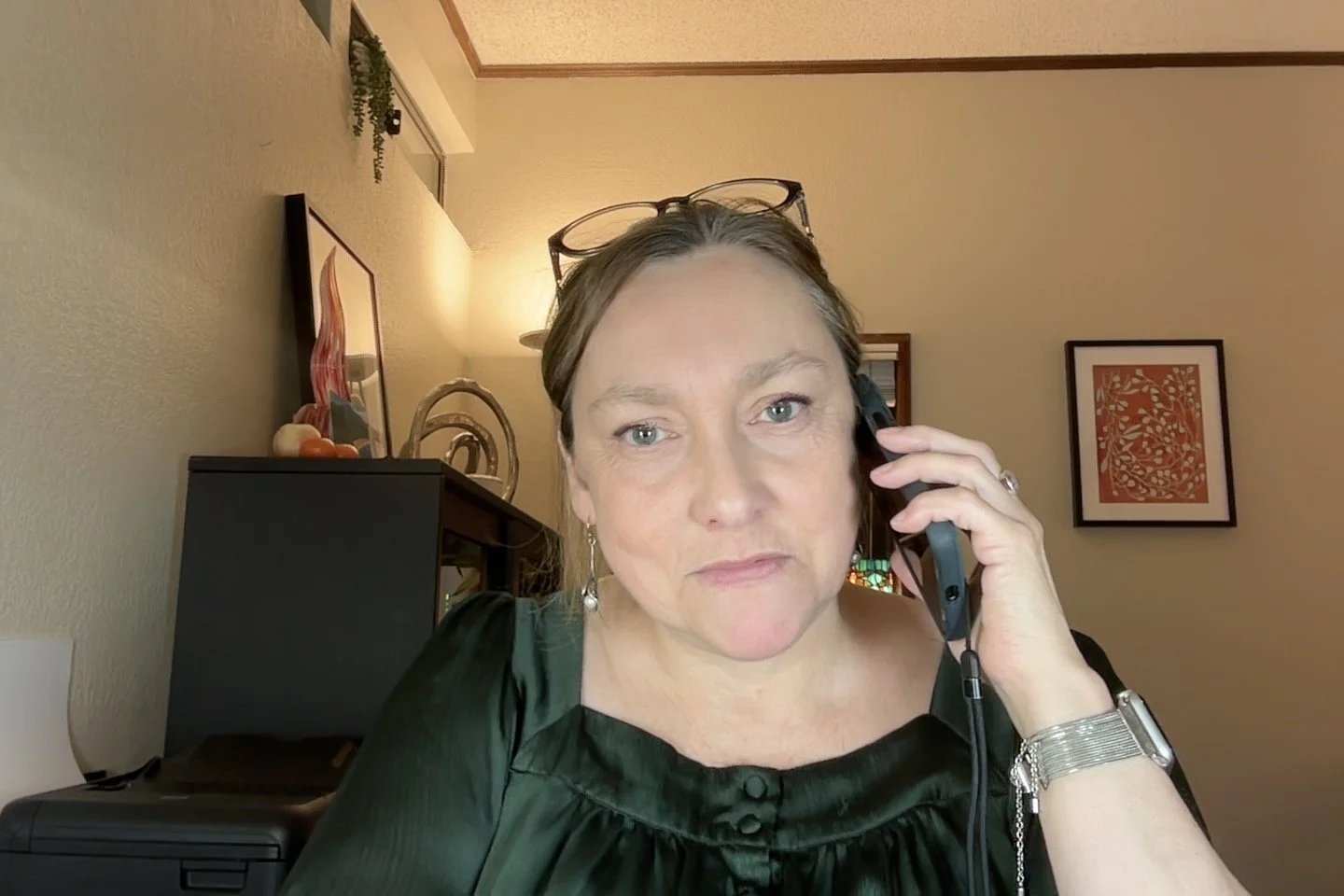
The author discussing counseling in Davis
Looking for therapy or counseling can be an onerous task that takes a stepped approach and an awareness of the process. You can find more help in my post Finding the Right Therapy or Counseling in Davis. Meanwhile, let’s focus here on questions to narrow down the options.
Why Asking Questions Helps You Find the Right Fit
You may have heard of people talking about the “right fit” of a therapist or counselor. This can be a euphemism for “I didn’t like that therapist” but in reality we know that the quality of the client-therapist relationship is fundamental to progress and healing. Sometimes the connection is simply not strong enough to hold the work together. And just as clients come from different backgrounds, cultures, and problems, therapists come with different experience, training, and areas of expertise, not to mention theoretical approaches. Many therapists offer a 15 minute free consultation which gives you a perfect opportunity to ask questions and get an initial sense of “fit.” When you consider how much time (and possibly money) you will spend in this relationship, interviewing therapists makes a lot of sense.
Questions to Ask about Therapy and Counseling in Davis
Each person’s questions may be a little different but there are some that I find arise frequently.
Do you work with individuals, couples, families, children, adolescents, or older adults? Work with each of these groups can be specialized, with the therapist knowing particulars about what to look for, how to recognize what is perhaps happening, and understanding specific dynamics, life cycle issues, or transitions. I, for example, work with adult individuals and if someone asks me for couples counseling I refer them to someone who can better help them.
Do you have a particular area of expertise?
As there are over 300 different mental health diagnoses in the Diagnostic and Statistical Manual of Mental Disorders (known as the DSM 5) which psychotherapists, psychologists, psychiatrists, physicians and specialists use to guide treatment (and sometimes insurance payment), you want to know if your new therapist understands how to work with what is going on for you. For example, I treat several diagnoses including Post -Traumatic Stress Disorder (PTSD), Depression, Anxiety, Panic Disorder, and Complex Trauma (CPTSD). I have taken specialized training in these areas and this is where the bulk of my experience and knowledge lies. People also seek treatment for other issues not explicitly in the DSM, for example relationships, life transitions, self-esteem or fulfillment, or for individual problems that might not appear to be part of a diagnosis, for example, insomnia or difficulties with weight loss.
What approaches do you use? It used to be that therapy was known for the client lying on the couch and talking while the therapist would offer reflections and ask questions. We have added many more ways of doing therapy and there is no one-size-fits-all. A lot of the work is about integrating old memories or issues into our minds as they can show up as what is often called “emotional hijacking”, or about integrating thoughts and feelings that are at disparity with one another and show up as inner conflict. Some approaches are very thought based, for example Cognitive Behavioral Therapy (CBT,) or Cognitive Processing Therapy (CPT), while some are more based in the body (for example Eye Movement Desensitization and Reprocessing (EMDR) or Sensorimotor Psychotherapy. And skillful good old talk therapy is still a very effective way to get to ease and results. Knowing your comfort level with just talking, using visualization, doing homework, or working with “inner children” for example, can help you narrow down your options.
How long have you been using your approach?
Finding out the level of your prospective therapist’s experience can be a guide to how well they will be able to navigate the particularities of your own situation. Therapy is definitely an art as well as a science and you want to have an “artist” who is best able to lead you to the outcome you want.
How do you conceptualize my problem?
Along with all the approaches available to address issues comes the way in which therapists see the problems they work with. There are several main ways to think about this:
Behavioral. Many therapies focus on changing how a person or people change and react in the moment resulting in different outcomes. One example is responding to depression by increasing socialization which can lead someone to feel better.
Cognitive. Changing how we think about things can make a big difference in how we feel. For example, if I get stuck on a recent disturbing news item I might feel anxious or hopeless. Learning and practicing choosing more helpful thoughts can bring a shift in our life experience.
Somatic. We know that what happens in our bodies interacts with our mind and vice versa (think of sadness and crying.) Working with a therapist to release the deep tension held in our nervous systems can unlock the physical effects of emotional or mental stress.
Root causes. We all have “internal working models” or frameworks about who we are and how the world works. Sometimes these models show up with deep-seated beliefs for example, “I am not good enough” or “I do not belong.” Taking the time to unseat or loosen these deeply rooted beliefs can bring relief and movement away from a lifelong internal struggle.
What is your cancellation/rescheduling policy?
In many cases, therapists and clinics will allow a certain number of “no-shows” or “late cancellations” before discharging a client so understanding those allows you to decide if this particular option accommodates your needs. And it leads to the next question.
How much flexibility could I have in my appt times?
Often counseling in Davis happens on the same day and time each week. The routine often works best for people who have to accommodate a busy daily life or value consistency. Sometimes people have changing schedules or other life demands and flexibility can make or break therapy, so knowing expectations and options for rescheduling and cancellation is a key early question.
Do you offer in-person sessions?
We have moved to a world where video options exist for almost everything (even physical therapy and music lessons, I recently discovered.) I find that while in-person and video sessions can both be effective, many clients prefer the support, calm, and safety of in-person sessions while others need the flexibility, cannot spend time traveling, or cannot leave home. You know yourself and may have a preference.
Do you take my insurance and if not, what is your session fee?
This one seems self-evident yet it is often not asked. It is a good and totally reasonable question to ask before scheduling an appointment—you wouldn’t buy a car without knowing what you were getting yourself into financially! If you want to use insurance, check whether you have an HMO (Health Maintenance Organization) or PPO (Preferred Provider Organization); it should be written on your insurance card. And for a little more information about the difference, check out my page here.
What to Listen for in Their Answers
Notice how you feel as you gather and discuss this information. Is that “good fit” or connection there? Is asking questions encouraged? What is the tone? Is there space for you in the conversation? And of course, were the questions answered and were the answers helpful?
Conclusion
Therapy requires an investment of time and resources to obtain change in the direction of your goals. Knowing which questions to ask to make an initial assessment will result in an easier decision on which therapist to move forward with. These questions above are a good start and can be supplemented with any others you have thought about. I always encourage questions, knowing that not every therapist is for every person, rather therapists offer their particular skill and way of doing things to help you find the best path to your goals. On behalf of my colleagues who provide therapy and counseling in Davis, we are here to support you as you take this first step.
Author Bio
Jean McSorley LCSW, is a Licensed Clinical Social Worker in Davis, Ca. She specializes in treatment for trauma and attachment wounding and uses EMDR and other therapies to help clients find joy and inner safety previously unavailable to them. Jean is known for her work with complex mental health situations and for providing clinical supervision.